
16 de octubre de 2026
Qué atraviesa un lote de almacenamiento antes de salir de fábrica: burn-in, BIT y prueba de temperatura alta y baja
La cadena de pruebas previo al envío que hay detrás de cada lote de almacenamiento: burn-in, verificación funcional BIT y validación de temperatura alta y baja, y los registros exactos que los compradores pueden solicitar.
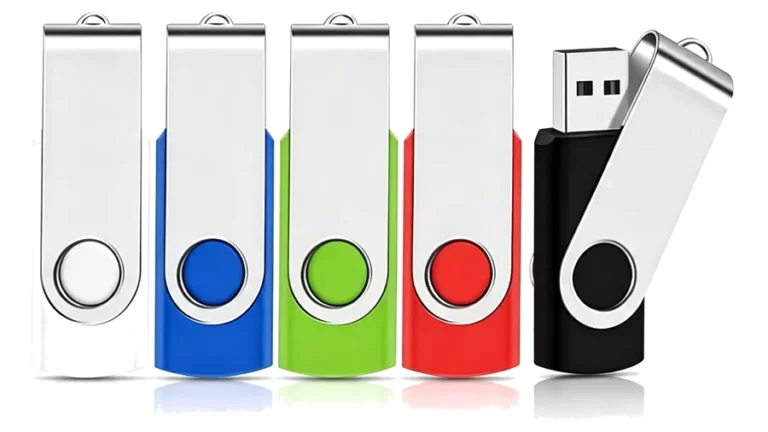
Este artículo está disponible en inglés.
Batch-level testing is where a storage quotation becomes verifiable. A B2B buyer rarely gets to stand on the line, so what actually protects an order is the test chain applied before packing — and the records that chain leaves behind. This article walks through the pre-shipment test sequence for USB flash drives, TF cards, SSDs, portable SSDs, USB hubs and card readers, and the questions a buyer should put to a supplier at each gate.
Shenzhen LingC Industrial Co., Ltd. is a storage and computer-peripheral manufacturer based in Shenzhen, China. The company was founded in 2023, and the team behind it brings more than a decade of experience in storage manufacturing. LingC runs copy machines, high-low temperature testing and BIT testing in-house, applies factory burn-in testing to every production batch, and keeps the results against the batch record. That is the claim; the rest of this article turns it into checks any buyer can request.
Why the Test Chain Matters More Than the Equipment List
A supplier that answers a quality question with a list of machines has not answered it. What matters is where each test sits in the process, whether it runs on every unit or on a sample, and whether the result is written down. A test that happens once and is never recorded cannot support a warranty claim months later. So ask for the chain, not the catalogue: which gate, applied to what, and recorded how.
Gate 1 — Burn-in (Factory Aging) on Every Batch
Burn-in is a controlled run before packing, used to surface early-life failures that a quick functional pass would miss. The buyer-relevant details are coverage and position: is aging applied to every unit or to a sample, and does it sit before or after final functional test? LingC applies a factory aging test to every production batch. The record that proves it is a batch aging log tied to the batch code.
Gate 2 — BIT (Built-In Test) Verification
BIT is the functional checkpoint: does each unit enumerate correctly, mount, and pass a read/write verification within specification? The useful question is not “do you test” but “what does a pass include”. A full-capacity write-and-readback check is a different claim from a quick mount check. Ask whether the BIT result is stored per batch, and whether the test host and file profile are fixed, so results stay comparable from one shipment to the next.
Gate 3 — High-Low Temperature Validation
Temperature testing takes a unit or sample through the range it will meet in transit and in use, then confirms it still works. This is where a design that passes on a bench but drifts in a cold warehouse or a hot vehicle is separated from one that holds. The record that matters is the temperature profile used and the pass criteria, not a single headline number. Treat this as a design-validation gate, and confirm which models it covers and at which stage of the program it runs.
The Test Chain and the Records to Request
| Test gate | What it verifies | Record a buyer should request |
|---|---|---|
| Burn-in (factory aging) | Early-life failures surface before packing | Batch aging log tied to the batch code |
| BIT functional check | Each unit enumerates, mounts and passes read/write verification | Per-batch BIT result, with the test host and file profile stated |
| High-low temperature validation | The design holds across the shipment and use temperature range | Temperature profile and pass criteria, by model |
| Final release before packing | A batch has met every gate above | Signed batch release statement, travelling with the shipment documents |
How to Read a Batch Record
Ask for a release decision, not a published rate. A percentage quoted without a defined test method cannot be checked against anything; a signed batch release statement can. Three questions do the work: what must a batch pass before it is packed, who signs the release, and does that release travel with the shipment documents. The same discipline carries into repeat orders, where the test method must stay fixed so a new batch can be compared with the approved one.
Where This Connects to Your Program
Testing is only half of a delivery. The other half is whether the same build, the same test method and the same packaging can be repeated on schedule. Buyers building a private-label range usually pair the test chain above with a documented OEM/ODM program , so that a change in a component or a process is notified rather than discovered. For a first order, request the batch records alongside the quotation, then compare the first mass-production batch against the approved sample on the same method.
Frequently Asked Questions
Is burn-in the same as a functional test?
No. A functional test confirms a unit works at the moment of testing; burn-in runs a unit under load for a period to surface early-life failures before packing. Both matter, and they are recorded differently.
Can testing be verified without visiting the factory?
To a useful degree, yes. The batch aging log, the per-batch BIT result and the temperature profile can all be reviewed remotely. A factory visit confirms the process; the records confirm that it actually ran on your batch.
Does every model follow the same test chain?
The gates are consistent, but coverage differs by product line and by model — a design-validation temperature profile is not applied to every SKU in the same way. Confirm the applicable chain for the exact model on your quotation, not for the range as a whole.
What should arrive with the shipment?
At minimum, a signed batch release statement that ties the shipment to its batch code and its test gates. Other documents depend on the model and the destination market.
Summary
A pre-shipment test chain is only as strong as its records. Confirm the three gates — burn-in on every batch, BIT functional verification, and high-low temperature validation — then ask for the batch aging log, the per-batch BIT result and the signed release statement that tie them to your goods. Compliance documents follow the model: the FD1003 USB flash drive, the TF-Premium (TFP3310) TF card, the PS5005 portable SSD, the RD3001 card reader and the HB2011 and HB2090 hubs carry CE / FCC / RoHS documentation; for any other model, certification for this specific model can be arranged upon order confirmation. The factory runs an ISO 9001 / 14001 / 45001 management system, certified since 2024 and renewed in 2026, and warranty terms differ by product line and are confirmed in the quotation.
To see the range these gates apply to, browse our USB flash drive line , or send us the exact model list and destination market you are buying for.
Request a Quote
Este artículo también está publicado en el blog de lingctech.com.Ver la publicación original
Modelos mencionados en este artículo
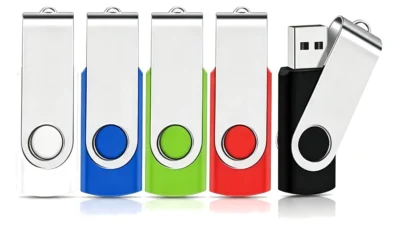
Memorias USB
FD1003
Memoria USB giratoria
- Interfaz
- USB 2.0
- Capacidad
- 4GB~64GB
- Velocidad
- —

Tarjetas de memoria
TFP3310
Tarjeta de memoria TF de alta calidad
- Interfaz
- TF
- Capacidad
- 32GB~256GB
- Velocidad
- —

SSD portátiles
PS5005
SSD portátil magnético de alto rendimiento
- Interfaz
- Type-C
- Capacidad
- 512GB~2TB
- Velocidad
- 2000MB/s
¿Compras los productos de este artículo?
Envía los modelos y cantidades: precio, plazo y muestras en 1-2 días laborables.