
November 18, 2026
Data Retention on the Shelf: How Long Unused Storage Keeps Its Content
Data retention on the shelf is a conditional claim, not a year count. How temperature, power-off time and write history change it, and what to put in the PO.
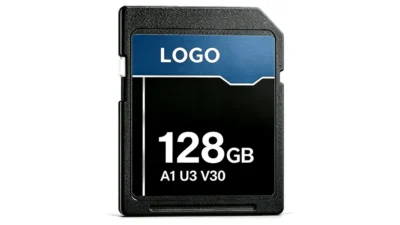
A spare card sits sealed in a service kit. It was written two years ago, read once for a spot check, then forgotten. Now the unit it belongs to is being restored in the field. The card enumerates, the folder listing appears, and several files fail their checksum. Nobody misled anyone: the datasheet carried a number, but the number arrived without its conditions.
Data retention gets quoted in B2B storage conversations as if it were a fixed property, like weight or length. It is not: it is a conditional claim, and the conditions are the part a buyer can test, specify and audit. Getting them into writing costs less than discovering them in a service return.
What data retention actually measures
Retention describes one thing: whether bits stored in a cell can still be read correctly after a period without power. Two mechanisms erode that ability.
Charge loss at the cell
Flash stores a bit as charge on a floating gate, and the sense amplifier decides the value from the voltage it measures. Charge drains slowly through the surrounding oxide even when the device is unpowered, and that leakage accelerates with temperature. A hot warehouse shelf is therefore not a climate-controlled one, which is why any serious retention statement names a temperature.
Degradation at the media level
Underneath the cell sit a controller, a mapping table and an error-correction engine. Early retention loss rarely appears as an unreadable sector, and instead shows up as reads needing more retries, then as corrected errors, then as blocks remapped out. A card that mounts and lists every filename can still return marginal data that no file listing reveals.
The four variables that move the answer
Retention is not set by the cell alone. Four inputs decide how much of it a stored unit has left, and only some are under the supplier's control after shipment.
| Variable | Direction of effect on retention | Action available to the buyer |
|---|---|---|
| Storage temperature | Higher average temperature shortens retention, and not linearly | Specify a storage band and measure it; keep stock out of sun-exposed areas |
| Time without power | Longer unpowered intervals accumulate charge loss and a narrowing read window | Set a maximum shelf age and enforce it with date coding |
| Erase and write history | Heavily cycled blocks hold charge less well than lightly used ones | Buy stock as new media; never return field units to the spare pool |
| Read frequency and verification | Periodic full-surface reads expose error growth early | Fund a scheduled verification pass, not one incoming check |
Only the first two are usually discussed. The third catches buyers who accept returned units into spare stock, and the fourth turns a latent problem into a known one.
Why a single number cannot be used
A statement of the form "retains data for X years" fails as a specification for three reasons. It rarely names a temperature, rarely names the failure criterion, and rarely says whether the figure came from a population test or from an extrapolation. Without those three, one number cannot be compared with any other number.
The limits of accelerated ageing
Suppliers estimate long retention by baking samples at elevated temperature and extrapolating back with a model. The method is legitimate, and it has a boundary: extrapolation assumes one dominant failure mechanism across the whole range. If a second mechanism becomes active at another temperature, the projection describes a world that does not exist. That is the honest reason to ask for test temperature, sample size and criterion instead of a headline figure.
Where the media type changes the answer
The physics is shared across product classes, but the exposure is not. A removable TF card such as TFS3310 lives outside any enclosure, so its retention question is tied to handling and to the socket. A premium TF card such as TFP3310 is often asked to hold firmware images through long idle periods. A metal-bodied USB flash drive such as FD2005 sits in a drawer and is rarely read, so verification rather than wear dominates. A portable SSD such as PS5005 carries a controller with stronger error handling, which buys headroom but hides degradation behind a healthy directory.
Six questions to put to the supplier
Ask these in writing, and treat an evasive answer as an answer; each has a follow-up a competent supplier can meet.
- At what temperature is the figure stated? Ask for a band rather than a single ambient assumption.
- What is the failure criterion? One uncorrectable error, a corrected-error threshold, or a failed-block rate.
- Was the figure measured or extrapolated? If extrapolated, at what bake temperature and for how long.
- At what point in the media life does it apply? Retention after light use and after heavy cycling are different claims.
- How is it verified? Full-surface read with checksum comparison, or a sample read of the file table.
- What invalidates it? Storage above a stated temperature, a reflow profile, or a relocation pass triggered at power-on.
Running shelf stock in practice
Three controls turn this into warehouse practice.
Date code on receipt, first-in-first-out on issue. Record the manufacture date or the test date rather than the goods-receipt date, and issue by age. Where a shipment arrives without one, request it on the label, because an undated spare pool has no shelf age you can defend.
A scheduled verification pass. Read the full surface of every stored unit on a fixed interval and compare checksums against a recorded baseline. Log the result per unit rather than per batch, so a trending unit can be pulled before it fails outright.
Retention samples and a scrap criterion. Hold a few unopened units from each intake as reference samples and test them on the same schedule. When a sample fails, the intake behind it is suspect. Write the scrap trigger in advance, as a failed-checksum count or a corrected-error threshold, so disposal is a decision already made rather than an argument.
Writing it into the purchase order
An acceptance clause is the only place where a retention claim becomes enforceable, and it does not need to be long. It needs a temperature, a criterion, a verification method and a consequence. A workable form of words: the goods retain stored data for the declared period within the declared storage temperature band. Verification is a full-surface read with checksum comparison on samples drawn per shipment, and failed samples trigger lot rejection.
Two supporting clauses close the obvious gaps. One requires notice before any NAND, controller or firmware change affecting retention, since a silent substitution invalidates every prior measurement. The other requires a date code on the unit label, because a shelf-life policy without a date cannot be applied to stock.
If you are building a stock and spares policy for storage media, Shenzhen LingC Industrial Co., Ltd. can help you define the verification schedule and the acceptance wording. Send your item list and storage conditions to Cherie at Cherie@lingctech.com.
This article is also published on the lingctech.com blog.View the original post
Models mentioned in this article

Memory Cards
TFS3310
Standard TF Card
- Interface
- TF
- Capacity
- 32GB~256GB
- Speed
- —

Memory Cards
TFP3310
Premium TF Card
- Interface
- TF
- Capacity
- 32GB~256GB
- Speed
- —

USB Flash Drives
FD2005
USB 3.2 Metal Swivel Flash Drive
- Interface
- USB 3.0
- Capacity
- 32GB~512GB
- Speed
- —
Sourcing the products in this article?
Send the models and quantities you need — pricing, lead time and sampling come back within 1-2 working days.